

Competition

Announcement
We are pleased to announce this year’s winners. We received a record number of 95 submissions. Thank you to all the teams who participated in this year’s IEEE Metaverse Grand Challenge for Simulation-Based Learning.
- First Place – Team Medtriage (Kenya)
Immersive Simulation for Emergency Decision-Making in Healthcare Education
Josephat Onkoba, Zetech University, Kenya
Memucan Kiprono, Zetech University, Kenya
Sophy Naliaka, Zetech University, Kenya
Samuel Kang’ethe, Zetech University, Kenya
Grace Kamure, Zetech University, Kenya - First Place – Team Unc#ded Connection (Hong Kong)
No-Code Metaverse for Culturally Immersive Learning
Kar Man Carman Chu, The Hong Kong Polytechnic University, Hong Kong, China
Xiaotao Wu, The Hong Kong Polytechnic University, Hong Kong, China
King Hong Chan, The Hong Kong Polytechnic University, Hong Kong, China
Cheuk Wing Yu, The Hong Kong Polytechnic University, Hong Kong, China - Second Place – Team Northeastern University (United States)
Synergistic VR and Holographic Simulation for Semiconductor Manufacturing Education
Barath Balamurugan, Northeastern University, United States
Yilin Song, Northeastern University, United States
Dhayalan Shakthivel, Northeastern University, United States
Mallesham Dasari, Northeastern University, United States - Second Place – Team Swetha_solo (India)
ER_VR
Swetha Asaithambi, Indian Institute of Technology, Kharagpur, India
Arshitha Shri UR, Ballari Medical College and Research Centre
- IEEE Smart Cities Award – Team EV Solvers (Bangladesh)
Bus 18 – The City
Md. Rifat Rahman, Bangladesh University of Engineering & Technology (BUET), Bangladesh
Dr. Md. Forkan Uddin, Bangladesh University of Engineering & Technology (BUET), Bangladesh
Competition Overview
After a successful 2025 competition, IEEE Metaverse and IEEE Young Professionals (YPs) are excited to host the 2026 IEEE Metaverse Grand Challenge for Simulation-Based Learning.
Participants will have the creative freedom to develop immersive simulations that model key processes and innovations in education. The challenge focuses on designing engaging, interactive simulations that can enhance the learning and training experience for YPs and students.
We are maintaining the same theme categories in 2026.
1) Healthcare Applications in Digital Learning
2) Sustainable Smart Cities and Urban Innovation
3) Advanced Learning in Educational or Classroom Environment.
- Two First-place winners receiving travel reimbursements to attend the 2026 IEEE International Symposium on Emerging Metaverse
- Two Second-place winners receiving a premium backpack and a certificate of achievement
- One winner receiving US$1,000, sponsored by IEEE Smart Cities
Awards will be given only if a suitable awardee is identified. Winners will be announced on 14 September.
Eligibility
All entrants must be:
- Students enrolled in an accredited university, or
- IEEE Young Professionals who graduated with their first professional degree within the past 15 years.
Teams may include a combination of students and Young Professionals.
Previous winners of the IEEE Metaverse Grand Challenge are eligible to participate, provided that their submissions are entirely new or substantially different from prior entries.
Contest opens 15 February 2026 and ends 15 August 2026 30 August 2026
Winners will be announced on 14 September.
Download official contest rules (PDF, 208 KB)
View last year’s winners and project summaries
Why join the competition? Perspectives from last year’s winners
Submission is closed.
Knowledge-Sharing Webinars

IEEE Metaverse Simulation Challenge 2026 Kick-Off Webinar
Date: 14 June 2026 (Sunday)
Download presentation slides (PDF, 7 MB)
Watch on-demand at YouTube
These knowledge webinars recorded in 2025 are valid for the 2026 IEEE Metaverse Grand Challenge. Please view these recordings to help you get started:
Webinar 1: Immersive Innovation for Smart Cities / SusTech – From Virtual Labs to Sustainable Futures
 Theme: Sustainable Smart Cities and Urban Innovation
Invited Speaker: Yesaswini Chilukuri, Senior Engineer, Sustainability Design, Khatib & Alami Engineering Consultants
Talk: Simulations as Catalysts for Sustainable Smart Cities
Date: 7 June 2025 (Saturday)
Watch on-demand at YouTube
Webinar 2: Designing Digital Healthcare Experiences – Simulation Concepts That Save Lives
 Theme: Healthcare Applications in Digital Learning
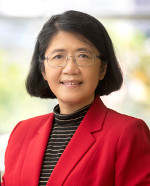
Invited Speaker: May Dongmei Wang, Professor, Georgia Institute of Technology and Emory University
Date: 8 June 2025 (Sunday)
Watch on-demand at YouTube
Webinar 3: Building the Future of Learning – Simulation Ideas for Smart Classrooms
 Theme: Advanced Learning in Educational or Classroom Environment
Invited Speaker: Gustavo Giannattasio, IEEE FDC Board, IEEE TEMS Board, IEEE Smart Cities Board, AI Coalition, TCOES, IEC, N&A, Committees
Talk: Simulation Ideas for Smart Classrooms
Date: 8 June 2025 (Sunday)
Watch on-demand at YouTube
Objective
The challenge aims to foster simulation-driven learning experiences on 2D or 3D metaverse platforms, allowing users to interactively engage with concepts, processes, and problem-solving scenarios. Participants will design, simulate, and showcase emerging technology using real-time, AI-enhanced, and/or user-adaptive simulations. The goal is to create scalable, immersive, and globally accessible educational tools that transform learning.
Teams:
- Teams may consist of 1 to 5 members.
- Each participant may be part of only one team.
- Teams cannot change members after project submission.
Theme Categories
Participants must select one of the following themes to guide their simulation development:
1. Healthcare Applications in Digital Learning
- Simulating patient interactions, surgical procedures, and/or medical training in immersive environments.
- Exploring AI-driven diagnostics, wearable health tech, and/or virtual hospital management simulations.
2. Sustainable Smart Cities and Urban Innovation
- Highlighting sustainability principles through virtual laboratories and/or eco-friendly innovations.
- Demonstrating energy-efficient systems, recycling methodologies, and/or sustainability analytics in educational settings.
- Public safety infrastructure, including smart surveillance, emergency response systems, and/or disaster resilience planning.
3. Advanced Learning in Educational or Classroom Environment
- Simulating AI-driven personalization in education, including adaptive learning systems.
- Exploring smart classroom concepts, immersive collaboration spaces, and/or AI-powered instructional tools.
- Focusing on inclusive, accessible, and future-ready learning environments.
View inspiration to spark your ideas! (PDF, 92 KB)
Submission Format
1. PowerPoint Presentation (up to 5 slides):
- Clearly indicate the selected theme.
- Provide a brief implementation design overview.
- Highlight key technology elements that enhance education and learning experiences.
2. Video Recording (5-7 minutes, MP4 format):
- Showcase your project in an engaging format.
- Highlight elements that should be considered in the evaluation process.
Submission Deadline: 30 August 2026
Judging Criteria:
Submissions will be evaluated based on the following:
| Criteria | Weight |
|---|---|
| Effectiveness of Simulation-Based Learning | 25% |
| Creativity & Innovation | 20% |
| Educational Impact and/or Learning Effectiveness | 20% |
| User Experience (UI/UX) & Engagement | 15% |
| Integration of AI, Gamification, and/or Adaptive Learning | 10% |
| Sustainability, Accessibility, and/or Ethical Considerations | 10% |
Prizes
The Contest will award up to two (2) first-place awards (travel reimbursements) and two (2) second-place awards. Awards will be given only if a suitable awardee is identified.
- Two (2) First-Place Awards (Travel Reimbursements): Each of the two prize winning teams will receive travel reimbursements of up to US$2,500 to attend the 2026 IEEE International Symposium on Emerging Metaverse (ISEMV) or another event to be determined by the IEEE Metaverse Initiative.
- Two (2) Second-Place Awards: Each of the two second-place teams will receive premium backpacks featuring the IEEE Metaverse and YP logos, along with a certificate of achievement.
In addition, the Contest, via the sponsorship of IEEE Smart Cities, will award up to one (1) first-place award (monetary prize) to a team who submitted under the “sustainable smart cities and urban innovation” category. The IEEE Smart Cities Award for Metaverse Grand Challenge for Simulation-based Learning will be given only if a suitable awardee is identified.
- One First-Place Award – US$1,000 monetary prize for the winning team.
A team can receive only one award.
Are you ready to shape the future of simulation-based learning? Join the challenge today! Download the official contest rules (PDF, 208 KB).
Competition Sponsors




Competition Chair: Polat Goktas, Faculty of Engineering and Natural Sciences, Sabancı University, Istanbul, Türkiye
For any questions or concerns, please contact [email protected].